Velocity Lending Solutions - Small Business & Real Estate Funding

Blog

Fix and Flip Financing

Fix-and-Flip Financing: How to Fund Your First Property Flip

You found the house. The bones are good, the neighborhood is turning over, and the numbers pencil out — on paper, at least. Then reality sets in: you don’t have $180,000 in cash sitting around to buy it, let alone the extra tens of thousands it’ll take to rip out the kitchen and re-do the roof. This is the moment where most first-time flippers stall out. They can spot a deal, but they don’t know how to fund it. That’s where fix and flip financing comes in, and understanding how it works is the difference between watching a good deal slip away and closing on your first project with confidence.

Fix and flip financing isn’t a mortgage in the traditional sense. It’s a short-term tool built specifically for investors who buy, renovate, and sell (or refinance) within months, not decades. Once you understand the mechanics, it stops feeling like a mystery and starts feeling like a plan.

How Fix and Flip Financing Actually Work

Traditional mortgages are built around your income and a property’s current condition. Fix and flip financing works differently. It’s designed around the deal itself — specifically, what the property will be worth after you’ve renovated it.

Here’s the basic structure:

Short repayment terms. Most fix-and-flip loans run 6 to 18 months. That timeline matches the reality of a flip: buy, renovate, sell, repeat. You’re not signing up for a 30-year commitment on a property you plan to unload before the year is out.

Purchase plus rehab, funded together. Instead of financing only the purchase price and leaving you to scrape together renovation cash separately, many fix-and-flip loans roll both into a single facility. Rehab funds are typically released in draws as work is completed and inspected, rather than handed over all at once.

Underwritten around ARV. ARV stands for after-repair value — what the property is projected to be worth once the renovation is finished, based on comparable sales in the area. Lenders use ARV, not the current “as-is” price, to determine how much they’re willing to lend. This is a core concept in fix and flip financing, because it’s what allows investors to borrow enough to cover both the purchase and the renovation, not just the purchase alone.

LTV governs how much you can borrow. LTV, or loan-to-value, is the percentage of a property’s value that a lender is willing to finance. In fix-and-flip lending, you’ll often see this expressed against ARV rather than purchase price. A lower LTV means you’ll need to bring more of your own cash to the deal; a higher LTV means less out of pocket, but usually comes with tradeoffs in pricing or lender requirements. Exact LTV thresholds vary by lender, property type, and market, so this is always a conversation to have directly with your lender rather than something to assume going in.

Points instead of (or alongside) rate alone. Points are an upfront fee charged as a percentage of the loan amount, paid at closing. One point equals one percent of the loan. Fix-and-flip lenders often charge points in addition to interest, and the number of points can shift based on your experience level, credit profile, and the specifics of the deal. We won’t quote figures here, since points, rates, and terms vary significantly by lender, market, and borrower profile — but it’s a line item you should always ask about and compare across offers.

Step-by-Step: Funding Your First Flip

  1. Find and vet the deal first. Before you talk to a single lender, know your numbers: purchase price, estimated rehab cost, and a realistic ARV based on recent comparable sales, not wishful thinking. Fix and flip financing is only as good as the deal underneath it.
  2. Build a real rehab budget. Walk the property with a contractor if at all possible. Vague estimates are one of the fastest ways to run out of money mid-project. Lenders will also want to see a scope of work, so this step does double duty.
  3. Get pre-qualified before you’re under contract. Talking to a lender early tells you what kind of fix and flip financing you’ll likely qualify for and how much cash you’ll need to bring, so you’re not scrambling once you’re in escrow with a clock running.
  4. Compare loan structures, not just headline pricing. Look at draw schedules, how rehab funds are disbursed, prepayment terms, and what happens if your timeline slips. The cheapest-looking offer isn’t always the one that sets you up to actually finish the project.
  5. Close on the purchase. Once your fix and flip financing is in place and you’ve cleared due diligence, you close on the property, and the rehab clock starts.
  6. Manage the renovation and draw process. Stay on top of contractor scheduling and inspection requirements for each draw. Delays here cost you money every single month your loan is outstanding.
  7. Plan your exit before you need it. Whether your exit is a sale or a refinance into a longer-term rental loan, start lining it up well before renovation wraps, not after.

Common First-Timer Mistakes to Avoid

Underestimating the rehab budget. Surprises hide behind walls. Experienced flippers build in a contingency cushion; first-timers often don’t, and it’s usually the first thing that turns a promising deal into a stressful one.

Ignoring the timeline’s real cost. Every extra month on a short-term loan is another month of carrying costs — interest, insurance, utilities, and property taxes. A flip that runs three months over schedule doesn’t just delay your profit; it eats into it.

Chasing the lowest rate without checking the whole picture. The lowest advertised rate isn’t useful if the draw process is slow, the lender is inflexible on timeline extensions, or the fine print includes fees you didn’t budget for. Fix and flip financing should be evaluated as a full package, not a single number.

Overestimating ARV. It’s tempting to lean on optimistic comparables to justify a deal you’re excited about. A conservative, well-supported ARV protects you from borrowing against a number that never materializes.

Skipping a contingency reserve. Beyond the rehab budget itself, first-timers should hold back cash for the unexpected — a permitting delay, a slower-than-expected sale, an extra draw cycle. Deals with zero margin for error rarely survive contact with reality.

Ready to Fund Your First Flip?

Fix and flip financing gives first-time investors a real path from “I found a deal” to “I closed on a deal” — but the right structure matters just as much as the right property. If you’ve got a property in mind, or you’re getting close, the smartest next step is talking to a lender who works with fix-and-flip investors every day.

Get a fix and flip financing quote from Velocity Lending Solutions and find out what your first flip could look like.

Contractor Equipment Financing | Velocity Lending Solutions

Contractor Equipment Financing to Grow Without Draining Cash

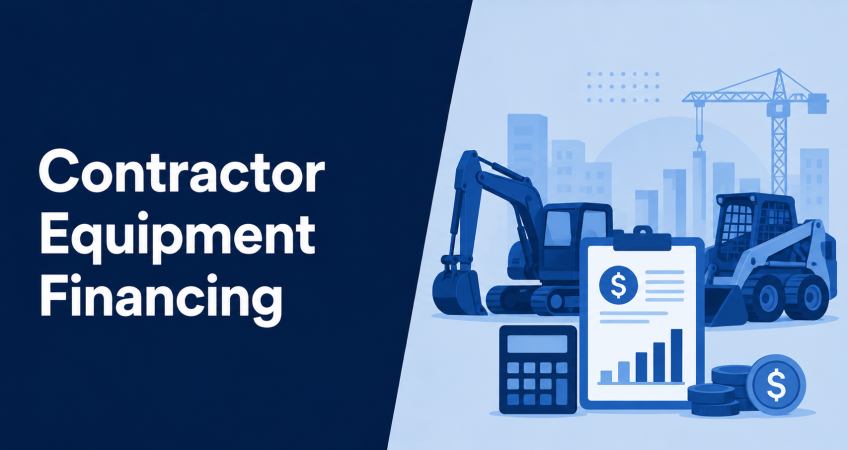
Say you need a new excavator, skid steer, or work truck to keep jobs moving. You’ve got two options: write a check and watch a big chunk of your cash reserves disappear in one shot, or use contractor equipment financing to spread that cost out while keeping your cash free for payroll, materials, and the next bid.

For a lot of contractors, paying cash feels like the “responsible” move — no debt, no monthly payment, done and done. But that logic falls apart fast when a slow-paying client, a supply cost spike, or an unexpected repair hits at the same time your cash is tied up in a piece of equipment sitting on a job site. Cash is what keeps your crew paid on Friday and your material orders flowing. Contractor equipment financing exists so you don’t have to choose between growing your operation and protecting that cushion.

This guide breaks down how contractor equipment financing actually works, what it can do for your business specifically, what you’ll need to apply, and how to think through buying versus financing versus leasing for your next purchase.

How Contractor Equipment Financing Works

Equipment financing is built around a simple idea: the equipment you’re buying serves as the collateral for the funding. Instead of a lender evaluating your business purely on cash flow or requiring you to pledge other business or personal assets, the excavator, truck, or attachment you’re financing effectively secures the deal.

Here’s the general flow:

  1. You identify the equipment — new or used — from a dealer or private seller.
  2. You apply for financing, typically providing basic business and financial documentation (more on that below).
  3. Once approved, the funding provider pays for the equipment (or reimburses you, depending on the structure), and you make payments over an agreed schedule.
  4. You get to use the equipment on your jobs immediately, rather than waiting until you’ve saved up enough to buy it outright.

Because the equipment itself backs the financing, this type of funding is often more accessible than unsecured options — and it lets you match the cost of a long-lasting asset (like a truck that’ll be on your jobs for years) with a payment structure spread over time, rather than a single upfront hit.

Every provider structures terms differently, so specific rates, down payment requirements, and repayment schedules will vary based on your business profile, the equipment itself, and the lender. Always review the specific terms of any offer carefully before signing.

Benefits of Contractor Equipment Financing

Preserve Working Capital

This is the big one. Contracting is a cash-intensive business — payroll, materials, subcontractors, fuel, insurance — all of it needs cash on hand, often before you’ve been paid for the job you’re doing. Financing equipment instead of paying cash means that capital stays available for the day-to-day costs of running your business, rather than being locked up in a piece of steel sitting in a lot.

Potential Tax Advantages

Depending on how you structure the financing and current tax rules, there may be deductions or depreciation benefits available when you finance business equipment. This is an area where the details matter and change from year to year, so talk to your accountant or tax professional about what applies to your specific situation before making assumptions. Don’t let a general statement about “tax benefits” be the reason you finance equipment — let it be one factor you confirm with a professional.

Take On Bigger Jobs, Faster

If a job requires equipment you don’t currently own — say, a bigger excavator for a commercial site prep job, or a second work truck to run two crews at once — financing can get that equipment in your hands without waiting months to save up. That means you can say yes to jobs that would otherwise be out of reach, and start generating revenue from the equipment while you’re still paying for it.

Keep Your Fleet Current

Financing also makes it more practical to upgrade equipment on a regular cycle instead of running older machines into the ground. Newer equipment often means fewer breakdowns, better fuel efficiency, and less unplanned downtime — all things that protect your schedule and your bottom line.

What You’ll Need to Apply for Contractor Equipment Financing

Every funding provider has its own requirements, but contractors applying for equipment financing should generally be prepared with:

  • Business information — how long you’ve been operating, your entity type, and basic details about your business.
  • Equipment details — what you’re financing (make, model, new or used), the seller or dealer, and the purchase price or quote.
  • Financial documentation — this commonly includes recent business bank statements, and may include tax returns or financial statements depending on the size of the request.
  • Time in business and revenue information — lenders want a general picture of your business’s operating history and cash flow.
  • A down payment, in some cases — depending on the equipment and the provider, a down payment may be required as part of the deal.

Because specific documentation requirements vary by provider and by the size and type of equipment, it’s worth having your basic paperwork organized before you start shopping so you can move quickly once you find the right piece of equipment.

Buy vs. Finance vs. Lease: A Quick Guide

There’s no single right answer here — it depends on the equipment, how long you’ll use it, and how your business is structured financially.

Buying with cash makes the most sense when you have significant cash reserves beyond what you need for operations, and you want to own the equipment outright with no ongoing payment. The tradeoff: a large chunk of your working capital is gone in one transaction, right when you might need it for something else.

Financing is usually the right call when you plan to use the equipment for years (think: a dump truck, excavator, or skid steer that’ll be part of your core fleet) and you want to spread the cost out while preserving cash for operations. You build equity in the equipment over time, and once it’s paid off, it’s yours.

Leasing can make sense for equipment you’ll only need for a defined period, or that you expect to upgrade frequently — some specialty attachments or rapidly-changing technology, for example. Leases often come with lower monthly payments than financing, but you generally don’t build ownership equity the way you do with a loan or financing agreement.

The right move depends on your specific business, your growth plans, and how that piece of equipment fits into your operation long-term. If you’re not sure which path makes sense for a given purchase, it’s worth talking it through with a funding specialist who works with contractors regularly.

Ready to Get the Equipment You Need — Without Draining Your Cash?

Whether it’s a work truck to run a second crew or an excavator for your next big job, contractor equipment financing lets you grow your operation without putting your working capital on the line. Apply for contractor equipment financing today and keep your cash where you need it — in your business.

SBA Loan vs Online Lender

SBA Loan vs. Online Lender: Which Is Right for Your Business?

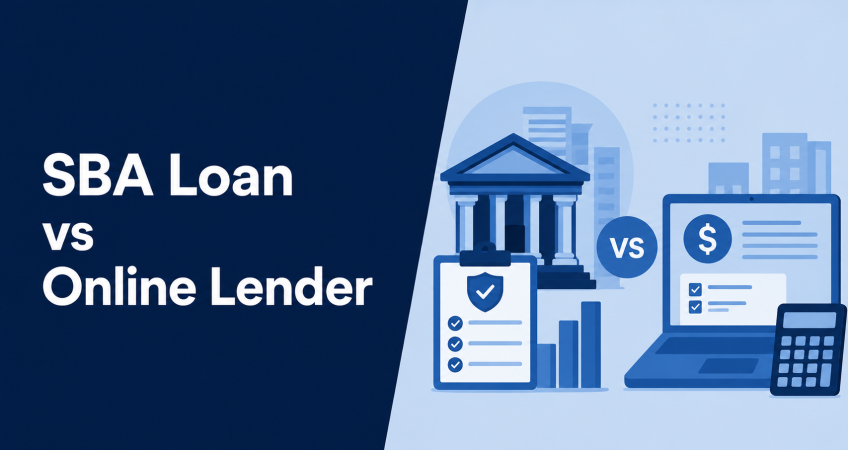
If you’ve started shopping for business funding, you’ve probably run into the same fork in the road every owner eventually hits: SBA loan vs online lender. It’s one of the most common comparisons small business owners face, and for good reason — the two paths lead to genuinely different experiences.

An SBA loan tends to offer lower costs and longer terms, but getting there usually means more paperwork and more patience. An online lender tends to move fast and ask for less, but that convenience usually comes at a price. Neither one is “better” across the board. The right answer depends on your timeline, your financials, and what you actually need the money for.

This guide breaks down how SBA loan vs online lender compare, when each one makes sense, and how to think through the decision without getting lost in fine print.

SBA Loan vs Online Lender: A Quick Comparison

Factor SBA Loan Online Lender
Speed to funding Generally slower — can take weeks to months depending on the lender and loan type Generally faster — some approvals and fundings happen in days
Cost Typically lower overall cost, with government-backed guidelines that tend to keep rates competitive Typically higher cost, reflecting faster underwriting and higher risk tolerance
Qualification difficulty More rigorous — strong credit, solid financials, and detailed documentation are usually expected More flexible — many lenders look at cash flow and recent revenue over a longer credit history
Loan amounts Can range from smaller working capital amounts up to larger sums for expansion, equipment, or real estate Usually more modest amounts, though this varies widely by lender and product
Best-fit borrower Established businesses that can wait for funding in exchange for better long-term terms Businesses that need capital quickly or don’t yet fit traditional underwriting boxes

Note: Actual speed, cost, and amounts vary significantly by lender, loan type, and your business’s specific profile. Treat the table above as a general pattern, not a quote.

When an SBA Loan Makes More Sense

SBA loans exist to help small businesses access financing on better terms than they might get otherwise, and for the right borrower, that trade-off is worth the extra time. Consider an SBA loan if:

  • You’re not in a rush. If you’re planning a few months ahead — for an expansion, a new location, or a major equipment purchase — you can afford to let the underwriting process run its course.
  • Your financials are in good shape. Solid credit, healthy cash flow, and clean books put you in a strong position to qualify and to get competitive terms.
  • You want to minimize long-term cost. Because SBA loans are structured with government backing, they’re generally built to keep the overall cost of capital more manageable over time compared to faster alternatives.
  • You need a larger amount with a longer repayment window. If you’re financing something substantial — real estate, a business acquisition, major equipment — the longer terms typically available through SBA financing can make monthly payments far more manageable.
  • You’ve been in business a while. Lenders offering SBA loans typically want to see an operating history and documentation that newer businesses may not yet have.

If those describe your situation, the extra time investment on the front end often pays off in lower payments and better terms for years afterward.

When an Online Lender Makes More Sense

Online lenders built their reputation by solving for the thing SBA loans can’t: speed. That makes them the better fit in a different set of situations. Consider an online lender if:

  • You need funding fast. Whether it’s a time-sensitive opportunity, a cash flow gap, or an unexpected expense, online lenders are generally built to move quickly when timing matters most.
  • Your business is newer or your credit isn’t perfect. Many online lenders weigh recent revenue and cash flow more heavily than credit score or years in business, which opens the door for businesses that wouldn’t clear traditional underwriting.
  • You want a simpler application process. Online lenders typically ask for less documentation up front, which can make the process feel far less daunting than a traditional loan application.
  • You need a smaller, shorter-term amount. If you don’t need a large sum or a multi-year runway, the faster, more flexible structure of online funding may fit the job better than a longer commitment.
  • You value flexibility over the lowest possible cost. Speed and accessibility come with tradeoffs, and for many owners, that tradeoff is worth it when the opportunity or the need is time-sensitive.

How to Decide Between SBA Loan vs Online Lender

When you strip away the details, the decision usually comes down to three questions:

  1. How soon do you need the money? If it’s weeks or months away, SBA financing stays on the table. If it’s days, an online lender is likely your realistic option.
  2. How strong are your financials today? Strong credit and solid financial history widen your options. If your business is newer or your credit has some dings, online lenders tend to be more accessible.
  3. What matters more — total cost or speed and flexibility? There’s rarely a wrong answer here, just a different priority. Be honest about which one matters more for this specific funding need.

Many business owners end up using both types of funding at different points in their growth — an SBA loan for a major, planned investment, and an online lender for shorter-term or time-sensitive needs. The two aren’t mutually exclusive; they’re tools for different jobs.

Compare Your Options Before You Decide

There’s no universal right answer between an SBA loan and an online lender — only the right answer for your business, right now. The best way to find it is to see what you actually qualify for and what the real terms look like side by side, rather than guessing based on general rules of thumb.

Compare your funding options with Velocity Lending Solutions to see which path fits your timeline, your financials, and your goals.

Real Estate Investing Funding Explained

Real Estate Investing Funding Explained: From Hard Money to DSCR Loans

If you’ve started shopping for financing on your first investment property, you’ve probably noticed something confusing: none of it looks like the mortgage you got for your own house. That’s because it isn’t. Real estate investing funding is a different world, built around the deal itself rather than your paycheck — and understanding how it works is the first real skill every investor needs to develop.

A traditional home loan is underwritten around you: your income, your job history, your personal debt-to-income ratio. Investor financing flips that model. Lenders in this space care most about the property — what it’s worth now, what it will be worth after repairs, and what it can earn in rent. That shift opens doors that conventional mortgages simply don’t, but it also means you need to learn a new vocabulary before you can pick the right loan for your strategy.

This guide walks through the main types of real estate investing funding you’ll encounter as a new investor — hard money, DSCR loans, fix-and-flip financing, rental/portfolio loans, and private money — so you can walk into your next deal speaking the language and knowing which option actually fits.


Why Real Estate Investing Funding Works Differently

Before diving into loan types, it helps to understand two terms you’ll see constantly:


    • LTV (Loan-to-Value): This is the loan amount compared to the property’s value, expressed as a percentage. A lower LTV means you’re putting more money down or bringing more equity to the deal; a higher LTV means the lender is financing a larger share of the purchase.
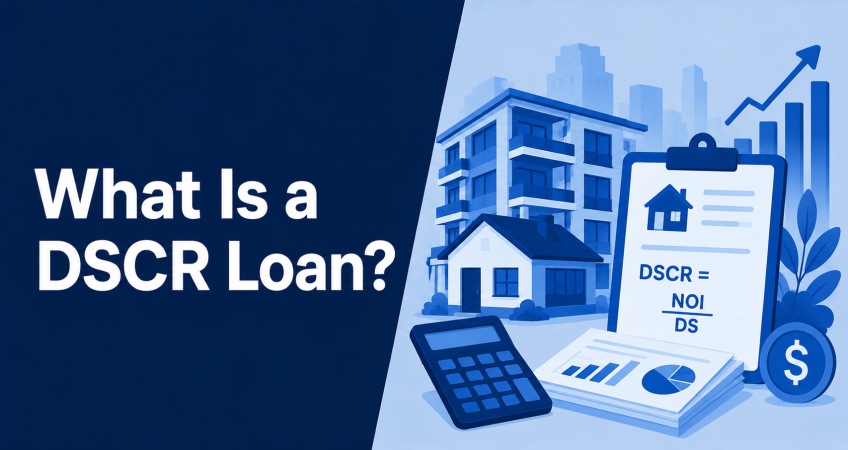
    • DSCR (Debt Service Coverage Ratio): This measures whether a property’s rental income covers its debt payments. It’s calculated by dividing the property’s income by its total debt obligations. A ratio above 1.0 generally means the rent covers the mortgage payment, though lenders may have their own minimum thresholds.


Keep these two concepts in mind — they show up again and again as you evaluate investor loan products.


Hard Money Loans

What it is: A hard money loan is a short-term loan secured primarily by the property itself rather than by your personal income or credit profile. These loans are typically funded by private lenders or lending companies rather than traditional banks, which allows for faster approvals and more flexible underwriting.

Typical use case: Hard money is often used when speed matters — competitive offers, auction purchases, or properties that need repairs and wouldn’t qualify for a conventional bank loan in their current condition. Terms are usually measured in months, not decades, with the expectation that the investor will refinance or sell before the term ends.

Who it’s best for: Investors who need to move quickly, are working with properties that need renovation, or don’t yet have the track record or documentation a conventional lender requires. It’s a common entry point for newer investors testing their first flip or bridge scenario.


DSCR Loans

What it is: A DSCR loan is a type of rental property loan that qualifies you based on the property’s cash flow rather than your personal income or tax returns. Instead of asking for pay stubs and W-2s, the lender looks at whether the rent the property generates (or is projected to generate) sufficiently covers the mortgage payment — the DSCR we defined above.

Typical use case: DSCR loans are popular for buying or refinancing long-term rental properties, especially for investors who are self-employed, have complex tax returns, or already own several properties and don’t want each new purchase to hinge on personal income documentation.

Who it’s best for: Buy-and-hold investors who want a repeatable, scalable way to finance rentals without re-proving their personal income on every deal. It’s also a strong fit for investors coming out of a fix-and-flip or hard money loan who want to refinance into a longer-term hold.


Fix-and-Flip Loans

What it is: Fix-and-flip financing is a short-term loan specifically structured to fund both the purchase and the renovation of a property, with the plan to sell it relatively quickly for a profit. Funds for repairs are often released in stages, or “draws,” as work is completed and verified.

Typical use case: Buying a distressed or dated property, funding the rehab budget alongside the purchase, and repaying the loan when the property sells. Because these loans account for the property’s value after repairs — sometimes referred to as its after-repair value, or ARV — investors can often finance more of the renovation cost than a traditional loan would allow.

Who it’s best for: Investors executing a flip strategy who need capital for both acquisition and construction in a single package, rather than juggling separate financing for each. It’s also useful for investors doing a “flip to rental” strategy who plan to convert the property before refinancing into a DSCR loan.


Rental and Portfolio Loans

What it is: A rental loan finances a single long-term rental property, while a portfolio loan bundles multiple rental properties under one loan with one set of terms and one monthly payment. Both are structured around the properties’ ongoing rental income rather than a short-term exit like a sale.

Typical use case: Rental loans are used to acquire or refinance one property you intend to hold and rent out. Portfolio loans come into play once an investor owns several properties and wants to simplify management — consolidating multiple mortgages into a single loan can streamline reporting, free up time, and sometimes improve overall loan terms.

Who it’s best for: Buy-and-hold investors growing a rental portfolio. Rental loans suit investors early in that journey, while portfolio loans tend to fit investors scaling past their first few properties who want less administrative complexity.


Private Money

What it is: Private money is financing sourced from an individual or a private group — often someone in an investor’s own network — rather than an institutional lender. Terms, rates, and structure are negotiated directly between the parties, which allows for significant flexibility but also requires a real relationship and mutual trust.

Typical use case: Private money is frequently used to fill gaps other financing doesn’t cover — a down payment, a renovation shortfall, or a deal that needs to close faster than an institutional lender can move. Some investors use it as their primary funding source once they’ve built a network of private lenders who understand their track record.

Who it’s best for: Investors with an existing network of people willing to lend, or those working on a deal structure that doesn’t fit neatly into standard loan products. It’s often paired with other financing rather than used alone.


How to Match the Loan to Your Strategy

The right funding option comes down to one core question: what is your exit plan for this property?


    • Buying to flip quickly? A fix-and-flip loan or hard money loan is typically the better fit, since both are built around a short hold period and a defined exit.
    • Buying to hold and rent long-term? A DSCR loan or rental loan lines up with that strategy, since qualification is based on the income the property generates.
    • Scaling a portfolio of rentals? A portfolio loan can simplify financing across multiple properties as you grow.
    • Need to move fast or fill a funding gap? Hard money or private money can bridge the timing or cash gap, often as a stepping stone toward longer-term financing.


Many experienced investors actually use more than one of these tools across a single deal’s lifecycle — for example, hard money to acquire and renovate a property, then a DSCR refinance once it’s stabilized and rented. There’s no single “correct” loan type; there’s the loan type that matches where you are in the deal and what you’re trying to accomplish next.

One more thing worth remembering as you compare offers: rates, LTV limits, and qualification requirements vary considerably from lender to lender and deal to deal. Treat any numbers you see as a starting point for a conversation, not a guarantee — a lender who understands your specific property and strategy can give you an accurate picture of what you actually qualify for.


Ready to Explore Your Real Estate Investing Funding Options?

Understanding the landscape is the first step. The next is finding the right product — and the right lender — for your specific deal. Whether you’re planning your first flip, refinancing into a long-term rental, or building out a portfolio, click on the button below to see which type of real estate investing funding fits your strategy.


Construction Business Funding Options

Construction Business Funding Options Every Contractor Should Know

Why do you need construction business funding? You know the drill better than anyone. You win the bid. You celebrate for about five minutes. Then reality shows up: you need to buy lumber, pour a deposit with a subcontractor, and get equipment on site — all before your first draw hits your account.

Meanwhile, the invoice from three jobs ago is still sitting on a client’s desk, “in process,” 60 days and counting. This is the rhythm of construction. Cash goes out fast. Cash comes in slow. And too many contractors treat that gap as just the cost of doing business — something to grind through with a maxed-out credit card and a lot of stress. It doesn’t have to be that way.

The right construction business funding can close that gap, keep your crews paid, and let you say yes to the next bid instead of turning it down because your cash is tied up in the last one.

This guide breaks down the main funding options built for contractors — what each one actually is, and the real job-site scenario where it makes sense.

The Cash Flow Squeeze Contractors Live With

Before getting into the options, it’s worth naming the problem clearly, because it shapes which funding type fits:

  • Upfront material costs. Steel, lumber, concrete, fixtures — often due before you’ve collected a dime on the project.
  • Draw schedules that lag real costs. You’re paying crews and suppliers today for work that won’t be reimbursed until a milestone is inspected and approved.
  • Slow-paying clients. Net-30 terms that turn into net-60 or net-90 in practice, especially with GCs and municipal clients.
  • Seasonal and project-based revenue. Feast in summer, drought in winter, with fixed costs running year-round.
  • Equipment that wears out at the worst time. A skid steer breaking down mid-project doesn’t wait for a convenient moment in your cash flow.

Each of these pressures points to a different funding tool. Here’s how they stack up.

Equipment Financing: For When Your Tools Need to Earn Before They’re Paid Off

Equipment financing lets you purchase or lease machinery, vehicles, or tools and pay for them over time, with the equipment itself typically securing the funding. Instead of draining your working capital on a single purchase, you spread the cost out while the equipment is already generating revenue.

Where it shines: You just landed a job that requires a piece of equipment you don’t own — say, an excavator for a grading job, or a bucket truck for a commercial electrical contract. Buying it outright would wipe out your cushion. Equipment financing lets the machine pay for itself across the jobs it helps you win, instead of forcing you to choose between the purchase and payroll.

It’s also useful for replacing aging equipment before it fails on a job site, rather than scrambling for cash after a breakdown stalls a project.

Business Lines of Credit: Construction Business Funding For the Ongoing Ebb and Flow

A business line of credit gives you access to a set amount of funding that you can draw from as needed, repay, and draw from again — similar in concept to a credit card, but generally with lower costs and higher limits designed for business use.

Where it shines: You’ve got multiple jobs running at different stages. One is waiting on a draw, one needs materials ordered this week, and payroll is due Friday regardless of what stage anything is in. A line of credit lets you cover the gap without applying for new funding every time a timing mismatch pops up. You draw what you need, when you need it, and you’re not paying for funding you’re not using.

This is often the most flexible tool for the day-to-day reality of running overlapping projects with staggered payment timelines.

Working Capital Funding: For Keeping the Whole Operation Moving

This construction business funding option provides a lump sum (or in some structures, ongoing access to funds) intended to cover general operating costs — payroll, materials, insurance, rent on your yard or shop — rather than financing one specific asset.

Where it shines: You’ve got a backlog of work, which is a good problem to have, but growth itself costs money before it pays off. You need to bring on another crew, cover a larger payroll, and keep suppliers paid on time to protect your credit terms with them — all while waiting on client payments to catch up. Working capital funding bridges that growth gap so scaling up doesn’t starve your cash position.

It’s also a common option when a contractor needs to shore up cash reserves heading into a slower season, so fixed costs don’t become a crisis when project volume dips.

Invoice and Receivables Financing: For Getting Paid Now, Not in 60 Days

Invoice or receivables financing (sometimes structured as invoice factoring) lets you access funding based on the value of outstanding invoices you’ve already billed, rather than waiting for the client to pay on their own timeline. Instead of your cash being stuck in accounts receivable, you get a substantial portion of that value now.

Where it shines: You completed a phase of work, submitted the invoice, and the GC or property owner is sitting on net-60 terms — but your subcontractors and suppliers don’t operate on net-60. Receivables financing turns that invoice into usable cash without you having to chase the client harder or eat the delay yourself. It’s particularly useful for contractors who regularly work with larger commercial clients or government contracts where slow payment cycles are simply part of the deal.

This tool is about your own money — work you’ve already done and billed for — getting to you faster, not new debt for something you haven’t earned yet.

SBA Loans: Construction Business Funding For Bigger, Longer-Term Moves

SBA loans are loans partially guaranteed by the U.S. Small Business Administration and issued through participating lenders, generally offering longer repayment terms and being used for larger, more strategic investments than day-to-day cash flow gaps.

Where it shines: You’re not just trying to survive until the next draw — you’re trying to grow the business itself. Maybe you’re buying a facility for your equipment and materials, acquiring another contracting business, or making a major investment in your fleet. SBA loans are generally a better fit for these larger, longer-horizon moves than for smoothing out short-term cash flow, since the application and funding timeline tends to be longer than other options on this list.

If your need is urgent — payroll this week, materials for a job starting Monday — an SBA loan usually isn’t the fastest path. But for building the business over the next five to ten years, it’s worth having in your toolkit.

What Lenders Look At for Construction Business Funding

Construction is a unique risk profile in lending, and lenders typically weigh a combination of factors, including:

  • Time in business and project history — a track record of completed projects matters.
  • Cash flow patterns — including how seasonal or lumpy your revenue is, and whether you can show it clearly.
  • Outstanding contracts and backlog — signed work on the books is a strong signal of future revenue.
  • Business and personal credit profile — both often come into play, especially for newer businesses.
  • Existing debt and equipment obligations — what you’re already carrying matters for what you can take on.
  • Industry-specific risk factors — such as reliance on a small number of large clients (like one or two GCs), or exposure to specific project types.

Different construction business funding types weigh these factors differently, which is part of why matching the right tool to the right situation — rather than just taking whatever’s offered first — makes such a difference.

Get Your Business Ready for the Next Bid

Cash flow gaps don’t have to mean turning down work or running your business on stress and short-term fixes. Whether you need to bridge a draw schedule, replace equipment before it fails, or get paid on invoices that are aging past 60 days, there’s a funding option built for that specific problem.

The first step is understanding what you actually qualify for — not guessing, not settling for the first offer that lands in your inbox.

Get pre-qualified for construction business funding and find out which options fit where your business is right now.

Business Funding Options 101: Small Business Financing

Business Funding Options 101: The 7 Most Common Ways to Finance a Small Business

Starting or growing a small business is exciting—until you hit the funding question. Suddenly you’re staring at a wall of unfamiliar terms: term loans, lines of credit, SBA this, merchant cash advance that. If you’ve found yourself Googling “business funding options” at midnight, unsure where to even start, you’re not alone. Most first-time business owners feel exactly the same way.

Here’s the good news: you don’t need to become a finance expert overnight. You just need a clear, plain-English map of what’s out there so you can figure out what fits your situation. That’s what this guide is for. We’ll walk through the seven most common business funding options, explain what each one actually means, who it tends to work best for, and the honest pros and cons of each—no jargon left unexplained, no pressure.

Why Understanding Your Business Funding Options Matters

Before diving in, it helps to know that “financing” isn’t one-size-fits-all. The right business funding options depend on things like how long you’ve been in business, what you need the money for, how quickly you need it, and how your business’s cash flow looks month to month. Some options are built for large one-time purchases. Others are designed to smooth out the natural ups and downs of running a business. Knowing the difference can save you time, money, and a lot of stress.

Let’s get into it.

1. Term Loans

A term loan is probably what most people picture when they think of a “business loan.” You borrow a lump sum of money upfront and pay it back over a set period (the “term”), usually with a fixed monthly payment that includes interest.

Best for: A specific, one-time expense—like renovating a location, launching a new product line, or making a major investment in your business. It’s also a common option for business owners who want predictable payments they can budget around.

Pro: You get a clear repayment schedule, so you know exactly what you owe and when.

Con: Approval often depends on factors like time in business and financial history, and terms (repayment length, structure, and cost) vary significantly by lender.

2. Business Lines of Credit

Think of a business line of credit like a financial safety net you can dip into as needed. Instead of receiving one lump sum, you’re approved for a maximum amount you can draw from whenever you need it. You only pay interest on the portion you actually use, and as you repay it, that credit becomes available again.

Best for: Managing working capital—the day-to-day cash needed to cover payroll, inventory, or unexpected expenses—especially for businesses with seasonal ups and downs or irregular cash flow.

Pro: Flexibility. You’re not locked into borrowing a set amount you may not fully need.

Con: Because it’s revolving credit, it can be easy to rely on it repeatedly without a plan to pay it down, and terms can vary based on how much of the line you use.

3. SBA Loans

SBA loans are loans partially guaranteed by the U.S. Small Business Administration, but funded through banks or approved lenders. The SBA guarantee reduces some risk for the lender, which is part of why these loans are often associated with more favorable terms compared to some other financing types.

Best for: Established small businesses that can be patient with the application process and are looking for longer repayment terms, often for larger investments like real estate, equipment, or major expansion.

Pro: Because of the government backing, these loans can offer more accessible terms for qualifying businesses than some conventional options.

Con: The application process typically requires more documentation and can take longer than other funding types—not ideal if you need cash quickly.

4. Equipment Financing

If your business needs machinery, vehicles, computers, kitchen equipment, or any other physical tools to operate, equipment financing lets you borrow specifically to purchase that equipment. In many cases, the equipment itself serves as collateral, which can make this option more accessible than an unsecured loan.

Best for: Businesses that need to buy or upgrade specific equipment—think a restaurant buying an oven, a landscaping company buying a truck, or a salon buying styling chairs.

Pro: Because the equipment secures the loan, this can be an easier path to financing than options requiring no collateral, and it lets you spread the cost over time instead of paying cash upfront.

Con: It’s restricted to equipment purchases—you can’t use these funds for payroll, marketing, or other general business needs.

5. Invoice/Receivables Financing

If your business sends invoices to clients and then waits weeks (or months) to get paid, invoice financing (also called receivables financing) lets you borrow against those unpaid invoices instead of waiting on your customers. Essentially, you’re unlocking cash that’s already yours—just not in your bank account yet.

Best for: Business-to-business (B2B) companies with long invoice payment cycles, like agencies, wholesalers, or contractors, who need working capital now rather than 30, 60, or 90 days from now.

Pro: It’s based on your outstanding invoices rather than your overall credit profile, which can make it accessible to newer businesses with strong client relationships but limited credit history.

Con: Costs are typically tied to how long the invoice remains unpaid, so it can become more expensive if your clients are slow to pay.

6. Merchant Cash Advances

A merchant cash advance (MCA) isn’t technically a loan—it’s an advance against your future sales. A funder gives you a lump sum, and you repay it through a percentage of your daily or weekly credit card and debit card sales (or, in some structures, a fixed daily/weekly withdrawal).

Best for: Businesses with strong, consistent card sales—like retail stores or restaurants—that need cash quickly and can manage repayment tied to sales volume.

Pro: Approval is often based more on sales history than credit score, and funding can happen relatively quickly compared to traditional loans.

Con: MCAs are generally one of the more expensive forms of financing, and repayment can feel more aggressive since it’s tied directly to your daily sales.

7. Business Credit Cards

A business credit card works much like a personal one, but it’s tied to your business and often reported separately from your personal credit (depending on the card issuer and how it’s structured). It gives you a revolving credit limit you can use for everyday purchases.

Best for: Managing smaller, recurring business expenses—like software subscriptions, office supplies, or travel—and building a business credit history.

Pro: Easy to obtain relative to other financing types, especially for newer businesses, and many cards offer rewards or cash back on business spending.

Con: Interest costs can add up quickly if balances aren’t paid off regularly, making it a costlier option for large or long-term expenses.

How to Choose the Right Business Funding Options for You

With seven different paths in front of you, here’s a simple way to narrow things down. Ask yourself:

What am I actually funding? A specific big-ticket item (equipment financing or a term loan) is different from ongoing working capital needs (a line of credit or invoice financing).

How fast do I need the money? Some options, like SBA loans, take more time and documentation. Others, like credit cards or merchant cash advances, tend to move faster.

How predictable is my cash flow? Steady, predictable revenue often pairs well with fixed monthly payments. Seasonal or fluctuating revenue may be a better fit for flexible options like a line of credit.

What can I comfortably repay? This is the most important question of all. Every financing option should be evaluated based on what your business can realistically handle—not just what you’re approved for.

There’s no universal “best” option—only the business funding options that are best for your business, your timeline, and your goals. And in many cases, businesses use a combination of these tools at different stages of growth.

Ready to See What Business Funding Options You Qualify For?

Understanding your options is the first step. The next step is finding out, specifically, what’s available to your business—because every lender looks at things a little differently, and terms vary based on your qualifications.

Rather than guessing which of these seven paths fits best, you can get real, personalized answers in just a few minutes.

See if you qualify by clicking the button below and take the guesswork out of financing your business.


10 Essential Tips for Beginner Real Estate Investors

10 Essential Tips for Beginner Real Estate Investors

Many wealthy individuals consider real estate investment a lucrative venture for those willing to put in the effort and make informed decisions. However, for beginners, navigating the complex world of real estate can be challenging and overwhelming. To help you get started on the right track, we have compiled ten essential tips for beginner real estate investors. These tips will provide a solid foundation and guide you toward intelligent investment choices. Let’s dive in!

(more…)

Navigating Hard Money Loans: Pros, Cons, and Best Practices

When traditional financing options are not viable or time-sensitive, hard money loans emerge as a valuable alternative. Hard money loans offer unique advantages and considerations that borrowers must be aware of. This blog post will explore the pros, cons, and best practices associated with hard money loans. By understanding these key factors, borrowers can make informed decisions and navigate the world of hard money loans effectively.

(more…)

Why Access to Capital is Crucial for a Construction Business

Why is having capital so important for a construction business?

There are two main reasons.

Number 1 is it is much more difficult to grow and expand your construction business without the capital to do so.

Sure, you could dip into your cashflow if you want. But is this actually feasible?

Not usually and it’s usually not a good idea given the amount of resources it takes to grow a construction business.

(more…)

Best Startup Funding Sources in 2022

Starting a business can be very exciting. Perhaps you just left your day job that you hated, and now you are finally pursuing your dreams of being your own boss. Or maybe you’ve been a self starter your whole life and that you enjoy the challenges that come with being an entrepreneur.

Regardless of your reason for starting a business, one fact that’s hard to overlook is that over 50% of new businesses fail within five years. Lack of funding is often cited as one of the top reasons for failure. Cash is king and is often the life blood of business.

You may have the greatest ideas, but without cash to pay for resources, it can be tough to bring your ideas to the market. The biggest question many entrepreneurs ask is – How do I fund my startup?

(more…)